Phase I: Identifying an Educational Problem & a Proposed Solution Problem Identified:
*Learning Issue Lack of student motivation & participation in class “Rigby, Deci, Patrick, and Ryan (1992) reported that many studies of the relationship between motivation and learning achievement confirm that when students are more engaged in learning, they will more fully understand new knowledge and be more flexible in their use of it. Therefore, successfully promoting intrinsic motivation may increase task involvement and, consequently, learning achievement (Wang, & Reeves, 2006)”.
Students that do not participate in the classroom and/or participate in study sessions have performed poorly on class quizzes and/or exams.
“Type II applications of technology provide alternatives to paper-and-pencil work and physical laboratories. Virtual tutorial, modules, tours, and especially labs enhance our curriculum in several ways. Virtual activities encourage students to think and act like scientific researchers (Gabric, et.al, 2005)”.
The teacher noted that students scoring high on the tests given actively participated in class. She noted that one teacher reviewed his statistics and indicated that students who attended the study sessions did well on the exam. He also noted that half of the students failed while the other half passed with B’s and A’s. The disparity in their grades is disturbing.
In a research study that involved mathematics indicated that “research has demonstrated that many students have difficulties in learning mathematics and show poor performance in mathematics classrooms [1]. Moreover, research shows a decline in students’ motivation toward mathematics courses [2]. In fact, [3-5] argued that there is a positive correlation between student achievement and motivations in mathematics (Halat, 2008)”. School & Population Description: *School Background This school is one of two high schools within the Wentzville School district with a student population of 2,065 (584 ninth graders, 510 tenth graders, 510 eleventh graders, & 461 twelth graders). *Individuals Involved: There will be approximately 125 students, 1 biology teacher, a UMUC graduate student (me), and potentially a technology resource teacher will be participating in this research project. The students will consist of regular students, low readers, foreign language students, and students with physical and learning disabilities (eg., ADD/ADHD, autism). *Available Resources: Students in grades 9th to 10th have netbooks assigned to them throughout the school year as part of a 1:1 Netbook initiative started in this school one year ago. However, students in the 11th & 12th have no netbooks but have access to computers in the media center and computer technology rooms. There are, however, few 11th graders in this introductory biology course. In addition, students have access to the "Moodle" learning management system that are provided by the district. They are able to access this system with an internet connection anywhere. Teachers can use this system to post class information, webquests, weblinks, and students can engage in forums that are similar to wikis. “Integrating digital resources meaningfully remains a challenge for many teachers. However, when teachers weave structured student-centered activities—based on digital resources—into lessons students appreciate the result: This more scaffolded approach can help them understand abstract, difficult-to-grasp concepts (Goldenberg, 2011)”. Approval: Approval was received from the school principal of the High School on September 28th.
Conclusion: “Overall, after experiencing WebQuest activities, teachers felt that WebQuest promoted higher order thinking, critical thinking, problem-solving, engagement and understanding, and collaborative learning (Yang, Tzuo, & Komara, 2011)”.
I think that implementing WebQuest will be the most effective way to engage and challenge students to utilize the technological and analytical skills to access information and construct new knowledge as they explore specific topics.
Visit a few science based websites by clicking here
| 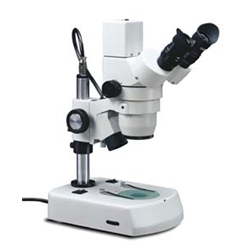 http://www.microscopeworld.com
Technology-Based Solution: Create a WebQuest for each chapter covered throughout the semester.
“Learning objects, defined as ‘interactive web-based tools designed to enhance, amplify and guide learning’ offer a promising, albeit untested technology tool for science teachers. Most learning objects are readily accessible over the internet, relatively easy to learn and use, and focus on specific concepts. They are also designed to support exploration, investigation, constructing solutions, and manipulating parameters instead of memorizing and retaining a series of facts (Kay, & Knaack, 2007)”.
Each WebQuest will be submitted to the teacher for review and approval before implementation. There will be a variety of audiovisual resource links that students will be able to access that will cover topics in each chapter.
“WebQuest is an inquiry-based teaching tool, in which students of all ages and levels participate in an authentic task that use pre-designed, pre-defined internet resources, though other print resources can also be used. Learners will put the focus on gathering, summarizing, synthesizing, and evaluating the information within clearly defined parameters in order to accomplish an authentic task set by the instructor ( Yang, Tzuo, & Komara, 2011).”
Research-Base Evidence: Reference(s): Barnes, I., Bruner, J., & Bryant, T. (2012) UMUC EDTC 630 School Technology Plan.
Gabric, K. M., Hovance, C. Z., Comstock, S. L., & Harnisch, D. L. (2005). Scientists in Their Own Classroom: The Use of Type II Technology in the Science Classroom. Computers in the Schools, 22(3/4), 77-91.
Gabric, K.M., Hovance, C.Z., Comstock, S.L., & Harnish, D.L. (2005). Scientists in Their Own Classroom: The Use of Type II Technology in the Science Classroom. Computers in the Schools, 22(3/4), 77-91.
Gaytan, S., & Pasaro, R. (2009). The Combined use of e-Learning and Traditional Learning Systems for Students of Biology and Biochemistry. Proceedings of the European Conference on E-Learning, 212-218.
Goldenberg, L. B. (2011). What Students Really Want in Science Class. Science Teacher, 78(6), 52-55. Halat, E. (2008). The Effects of Designing Webquests on the Motivation of Pre-Service Elementary School Teachers. International Journal of Mathematical Education in Science and Technology. 39 (6), 793-802. Gay, R., & Knaack, L. (2007). Evaluating the Use of Learning Objects for Secondary School Science. Journal of Computers in Mathematics and Science Teaching. 26(4), 261-289.
Kachina, O.A. (2012). Using WebQuests in the Social Sciences Classroom. Contemporary Issues in Education Research. 5(3), 185-199. Robyler, M.D., & Doering, A.H. (5th Ed.)(2010). Technology in Mathematics and Science Instruction. Integrating Educational Technology into Teaching. Boston, MA: Pearson Education, Inc. (329-338).
Sen, A.,& Neufeld, S. (2002). In Pursuit of Alternatives in ELT Methodology: Webquests. The Turkish Online Journal of Educational Technology, 5(1),49-67.
Williams, J. (2009). Managing Student Conceptions about Evolution Using the Integration of Multiliteracies in the Classroom. Teaching Science, 55(1), 10-14. Yusuf, M., & Afolabi, A. (2010). Effects of Computer Assisted Instruction (CAI) on Secondary School Students' Performance in Biology. Turkish Online Journal Of Educational Technology - TOJET, 9(1), 62-69. Yang, C., Tzuo, P., & Komara, C. (2011). Using Webquest as a Universal Design for Learning Tool to Enhance Teaching and Learning in Teacher Preparation Programs. Journal of College Teaching & Learning. 8(3), 21-29.
|
